http://www.realestateradiousa.com/blog/wp-content/uploads/2008/01/suntzu2.jpg --Sun Tzu
http://www.whyy.org/blogs/itsourcity/files/2008/11/money-stacks2.jpg --Economic Impact
http://photography.nationalgeographic.com/staticfiles/NGS/Shared/StaticFiles/Photography/Images/POD/f/fox-river-autumn-514400-sw.jpg- Autumn
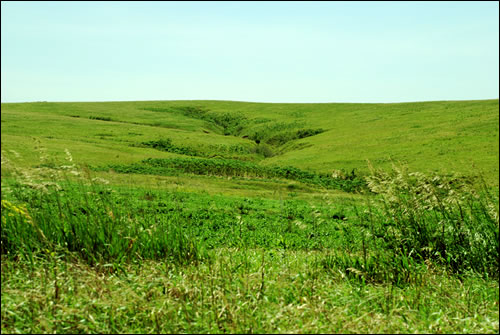
http://www.prairiefirenewspaper.com/files/spring-creek-prairie.jpg- Spring
http://4handsclapping.com/blog/wp-content/uploads/2009/01/fork-in-the-road.jpg- Deception
http://depts.washington.edu/chinaciv/1xarzhou.jpg -Map of China
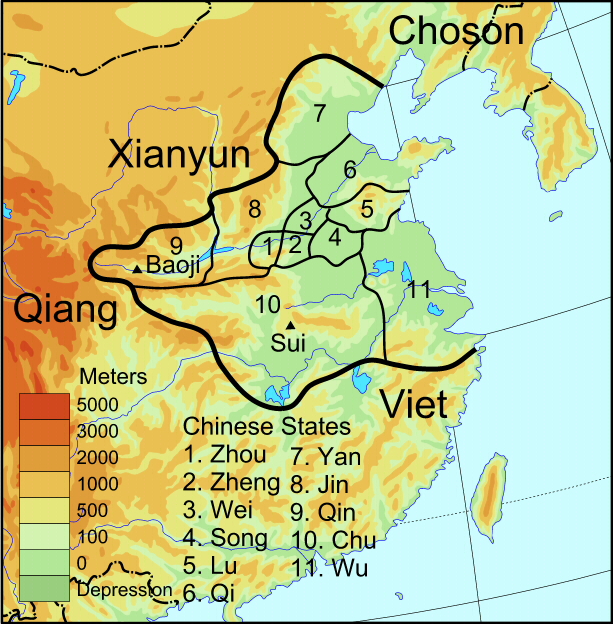
http://www.nationsonline.org/maps/chinese_dynasty_maps/Zhou_Dynasty_Map.jpg- Zhou
http://portal.unesco.org/en/files/42753/1215508711330206135_400.jpg/30206135_400.jpg - Strong position
http://www.hourofwolves.org/images/battles/skuldRepelsDanes/04_daneElementAgain.jpg- weak point
http://www.blogcdn.com/www.ps3fanboy.com/media/2007/11/assassins_creed_1080_3.jpg- spies
http://www.mybiztogo.com/catalog/images/SunTzu1.jpg- the art of war
http://www.lakesurf.com/weblog/SunTzu.jpg -victorious general
http://piava.files.wordpress.com/2008/03/competitive_intelligence.jpg- Intellegence
http://www.sbs.ox.ac.uk/NR/rdonlyres/DEB81C3C-7A32-4E28-8492-59586F2E1BED/3887/direct_communication_marketing.jpg- Communication
http://foreignallegiance.com/mkportal/modules/gallery/album/a_16.jpg -led armies
http://www.theredepic.com/Web%20Images%202/Pieces/spearman72dpi.jpg -soldier
http://www.digipendent.com/wp-content/uploads/2009/01/strategy.jpg -strategy
http://www.emeraldinsight.com/fig/0200130204001.png -chapters
http://militantplatypus.com/download/blogimages/outnumbered2.jpg-know you enemy
http://www.better-photographs.com/images/Photo-Editing-Distractions-Before.jpg -deception
http://upload.wikimedia.org/wikipedia/commons/a/a8/Norway-_Valley_view_from_Stalheim.jpeg- valley
http://www.visualstatistics.net/East-West/War%20East/Confucius.jpg -beliefs
http://www.defenselink.mil/dodcmsshare/newsphoto/2001-07/010605-D-9880W-290.jpg -hilltop
http://www.chinastrategies.com/soldier%20and%20flag.gif -chinese warrior
http://www.salesforcetraining.com/images/handshake_office_small.jpg -Business
http://www.downloadmunkey.net/images/peos-03.jpg -modern soldier
Friday, May 15, 2009







Wednesday, May 13, 2009
China Cards 21-25
- http://www.history.com/encyclopedia.do?articleId=201513
- Funk & Wagnalls New Encyclopedia, World Almanac Education Group, WRC Media Company.
- None, but it's the History Channel
- Sun Tzu wrote the earliest military treatise, The Art of War, which described Chinese weapons, command systems, communications, discipline, grade distinctions, strategy, etc.
- Yes
- HISTORY CHANNEL!
- http://classics.mit.edu/Tzu/artwar.html
- None
- None
- "When you engage in actual fighting, if victory is long in coming, then men's weapons will grow dull and their ardor will be damped. If you lay siege to a town, you will exhaust your strength." "If he is taking his ease, give him no rest. If his forces are united, separate them." "Attack him where he is unprepared, appear where you are not expected."
- Yes
- I have seen this quote many times
- http://www.waikato.ac.nz/wfass/subjects/history/waimilhist/1998/suntzu.html
- Dean McNicol
- referenced many people in the article
- the art of war can be used for the following: conflict between armies, and conflict between political organisations or countries
- Yes
- There are many references to back him up
- http://www.goodreads.com/author/show/1771.Sun_Tzu
- None
- None
- "Victorious warriors win first and then go to war, while defeated warriors go to war first and then seek to win"
- No
- This website is trying to sell the book. However, I've seen this quote before
- http://www.wideworldofquotes.com/quotes/sun-tzu-quotes.html
- Wide World of Quotes
- None
- "Opportunities multiply as they are seized." -- Sun Tzu, The Art of War "Pretend inferiority and encourage his arrogance." -- Sun Tzu, The Art of War
- Maybe
- This quotes is everywhere but there are no credincials to back the author up.
China Cards 16-20
- http://www.mailsbroadcast.com/the.artofwar.10.htm
- None
- None
- "A superior leader who calculatesthe distance or proximity of dangersand obstructions
and move with confidence anywhere inhis environment, is on the path to victory." - Not sure
- No source, but I've seen this quote before
- http://www.mailsbroadcast.com/the.artofwar.5.htm
- None
- None
- "In conflict, direct confrontation will lead to engagement and surprise will lead to victory.
Those who are skilled in producing surprises will win. Such tacticians are as versatile as the changes in haven and earth." - Not sure
- No source, but quote was seen in many, many places.
- http://www.mailsbroadcast.com/the.artofwar.2.htm
- None
- None
- Fight to win quickly. Those not aware of disadvantageous strategies cannot be aware of strategiesthat are advantageous.
- Not sure
- No source. The quote is familiar though
- http://www.freerepublic.com/focus/f-news/539453/posts
- John Robinson
- None
- "Thus, what enables the wise sovereign and the good general to strike and conquer, and achieve things beyond the reach of ordinary men, is foreknowledge.
Now this foreknowledge cannot be elicited from spirits; it cannot be obtained inductively from experience, nor by any deductive calculation.
Knowledge of the enemy's dispositions can only be obtained from other men" - Maybe
- There is a source but nothing to back him up
- http://refspace.com/quotes/Sun_Tzu
- None
- None
- "Thus, what is of supreme importance in war is to attack the enemy's strategy"
- not likely
- No source. no credicials
Tuesday, May 12, 2009
China Card 15
- http://www.chinapage.com/sunzi-e.html
- None
- None
- Hence to fight and conquer in all your battles is not supreme excellence; supreme excellence consists in breaking the enemy's resistance without fighting. Before jumping into combat, Sun Tzu would take everything into consideration.
- Can't tell
- no source- no credincials
China Card 14
- http://www.brainyquote.com/quotes/authors/s/sun_tzu.html
- Brainy media
- none
- "All warfare is based on deception" & "Hence that general is skilful in attack whose opponent does not know what to defend; and he is skilful in defense whose opponent does not know what to attack."- take advantage of your opponent
- Yes
- I have seen these many other places
China Card 13
- http://www.readprint.com/author-84/Sun-Tzu
- Read Print
- none
- Sun Tzu presented his art of war to the king of Wu, who employed him after proving that his techniques could be applyed to anyone. He made 180 court women into soldiers within one session.
- probably not but maybe
- I've seen this before, but don't know if it's real since there are no credincials
China Card 12
- http://www.military.com/NewContent1/0,14361,FreedomAlliance_062404,00.htm
- Oliver North
- combat decorated marine, a #1 best-selling author
- Sun Tzu taught his men to "know your enemy" before a battle. For if "you know your enemy and know yourself you need not fear the result of a hundred battles." However, Sun Tzu did say, "If you know yourself but not the enemy, for every victory gained you will also suffer a defeat."
- Yes
- Combat personel who most likely had to read this, and even if he didn't I've seen this quote other places.
China Card 11
- http://www.military-quotes.com/Sun-Tzu.htm
- Military-Quotes.com
- Can't be found
- Sun Tzu's strategy was to keep the conquered in one piece so they could serve some use to the conquerer. "In the practical art of war, the best thing of all is to take the enemy's country whole and intact; to shatter and destroy it is not so good. So, too, it is better to recapture an army entire than to destroy it."-Sun Tzu, the Art of War
- Yes
- Seen this quote other places
China Card 10
- http://learn.bowdoin.edu/suntzu/content.cgi?chapter=02
- Bowdoin College
- College of science and arts
- Military impact on economy:The military values victory.It does not value prolonging
Strategy:Taking a state whole is superior.
Therefore, in dispersed ground, do not do battle. In light ground, do not stop. In contested ground, do not attack. In connected ground, do not cross. In junction ground, join with allies. In heavy ground, plunder. In spread-out ground, move. In enclosed ground, strategize. In death ground, do battle.
Intelegence:Not knowing the other and not knowing oneself,In every battle certain defeat.
- Yes
- a univeristy that studies the arts
China Card 9
- http://en.wikipedia.org/wiki/Spring_and_Autumn_Period
- Ebrey, Patricia Buckley
- Cambridge University Press
- The Spring and Autumn period ended the feudal system in China as the control of the Zhou Dynasty came to an end. This resulted in the warring states period. Sun Tzu was the general who aided in the military reforms that lead to this.
- Not sure
- It's Wikipedia
China Card 8
- http://sonshi.com/why.html
- none
- none
- Sun Tzu, born in the state of Wu, became the general for King Ho-lu and captured the capital city of Ying to defeat the powerful Ch'u state. He then subdued the states of Ch'i and Chin during the Spring and Auttum period(722-481BC).
- Not sure
- no known source with credintials
China Card 7
- http://www.suntzu1.com/content/who_is_sun_tzu/
- Mark McNeilly
- same as card 6
- General for the Ch'i state during the age of warring states
- same as card 6
- same as card 6
China Card 6
- http://www.suntzu1.com/content/turning_strengths_into_weaknes/
- Mark McNeilly
- Wrote books on how to apply Sun Tzu's warfare to modernday
- Strategy was to turn enemy strength to weakness
- Yes
- took the works of someone else and took its applications to another aspect of life
Monday, May 11, 2009
China sources 5
- http://www.thefinertimes.com/Ancient-Wars/overview-of-ancient-chinese-wars.html
- The Finer Times 2008, A Divsion Of Pear Corporation
- don't know
- shifted tactics to deception and intellegence
- not sure
- can't find credencials
China sources 4
- http://en.wikipedia.org/wiki/Sun_Tzu
- Bradford, Alfred S. (2000), With Arrow, Sword, and Spear: A History of Warfare in the Ancient World, Praeger Publishers, ISBN 0275952592 .
Hanzhang, Tao; Wilkinson, Robert (1998), The Art of War, Wordsworth Editions, ISBN 9781853267796 .
McNeilly, Mark R. (2001), Sun Tzu and the Art of Modern Warfare, Oxford University Press, ISBN 0195133404 .
Sawyer, Ralph D. (1994), The Art of War, Westview Press, ISBN 081331951X .
Sawyer, Ralph D. (2005), The Essential Art of War, Basic Books, ISBN 0465072046 .
Simpkins, Annellen; Simpkins, C. Alexander (1999), Taoism: A Guide to Living in the Balance, Tuttle Publishing, ISBN 9780804831734 .
Tung, R.L. (2001), "Strategic Management Thought in East Asia", in Warner, Malcolm, Comparative Management:Critical Perspectives on Business and Management, 3, Routledge, ISBN 0415132630 . - Published Authors
- Lived during the warring states period (476–221 BCE) between the kingdoms of Zhou, Qi, Qin, Chu, Han, Wei and Yan.
- Yes
- reliable references
China sources 3
- http://en.wikipedia.org/wiki/The_Art_of_War
- muchos people
- translators
- The Art of War, writen in the 6th century B.C. became the strategy guide for many nations for a long time. It goes into many considerations beyond the battlefield, but to the armourment, economy, and role of the people in the army.
- yes
- many people have trasnlated this document
China sources 2
- http://artofwar.thetao.info/china/suntzu.htm
- none
- none
- born into nobility, taught by Machiavelli, took his strategies and invaded the kingdom of Yue
- not really
- non-named source
China sources 1
- http://www.online-literature.com/suntzu/
- Jalic Inc.
- featured in USA Today
- chinese military strategist and author of The Art of War
- not sure
- not very many credintials
Friday, May 8, 2009
DBQ Essay
Nonviolence
Nonviolence works by punishing the body that needs to be changed through other means than physical pain. Since through non-violence only one side of the dispute is physically harmed, it is the best solution to reduce the amount of violence. That is as long as there’s enough support for the movement.
Old Documents
“Document B”- Martin Luther said that boycotts were “necessary” and that this method “would be an effective one”. Boycotts harmed the economy in order to reach the desired result. However, since it was a non-violent protest, there were relatively few casualties.
Gandhi in “Document A” asked for “all the people in India” to “suspend their business on that day”. This is yet another example of a successful boycott in which the Indian people got the laws repealed with few fatalities.
Nelson Mandela, in “Document C” denied President Mr. de Klerk’s request to speak about ending international sanctions on South Africa. He felt that if the president wanted the economy to improve, sanctions were the best way to pressure the government to end apartheid. Once again, few people were harmed compared to if a full civil war broke out.
In “Document D”, Gandhi wrote a letter reassuring his desire to continue protests non-violently, but that he would carry out harming the government in an economical or political manner. Having the Indian people produce their own salt put an extra financial burden on the English government. Therefore their monopoly on salt was no longer a major source of income. Yet again, no one was harmed in this particular protest.
Nelson Mandela, in “Document I” said that non-violent protesters “could not retaliate otherwise they undermine the value of the entire enterprise”. In other words those who protest through nonviolence can’t fight back. If they do, then they would only provoke more violence and give a reason for their aggressors to continue attacking them.
New Documents
“Document N” provides a new form of nonviolent protest, the media. After TIME magazine finished a story on Martin Luther King’s movement, he could feel the hostility against him reduce. The media spreads information around to many people and that’s how Dr. King’s movement spread as far as it did, to as many people as it did. With this newfound support, Dr. King’s movement became even stronger, strong enough to eventually end segregation.
Another supporter of the media was Gandhi, who in “Document M”, described how newspapers allowed him to express his feelings in a way that wouldn’t harm people. He called it the “training ground for self restraint”. Also the use of the newspaper provided a means to study “human nature in all its shades and variations”. To Gandhi, the newspaper was the way to spread the truth to a mass audience. With the truth about what really transpired, people began to realize what atrocities the British were putting on the Indians. Soon afterward, the support grew so strong against the British, they had to leave India.
Moving visuals accompanied by audible noises
In South Africa, Gandhi burnt the passes required for Indians to be there in protest of the segregation taking place. Despite the fact that he was beat and taken prisoner, his movement commenced and gathered support as people began to hear of the inhumane treatment of the British. On the other hand, if Gandhi had retaliated, then the English would have had an excuse for the punishment that he received, and his arrest would therefore have had a lesser effect.
The massacre of 1500 Indians, the beating at the Dharasana Salt Works, and every other form of violence perpetrated by the British onto the Indians was part of Gandhi’s plan to get the people of the world to see how bad of treatment they were receiving and to convince them to end the suffering.
Nonviolence works by punishing the body that needs to be changed through other means than physical pain. Since through non-violence only one side of the dispute is physically harmed, it is the best solution to reduce the amount of violence. That is as long as there’s enough support for the movement.
Old Documents
“Document B”- Martin Luther said that boycotts were “necessary” and that this method “would be an effective one”. Boycotts harmed the economy in order to reach the desired result. However, since it was a non-violent protest, there were relatively few casualties.
Gandhi in “Document A” asked for “all the people in India” to “suspend their business on that day”. This is yet another example of a successful boycott in which the Indian people got the laws repealed with few fatalities.
Nelson Mandela, in “Document C” denied President Mr. de Klerk’s request to speak about ending international sanctions on South Africa. He felt that if the president wanted the economy to improve, sanctions were the best way to pressure the government to end apartheid. Once again, few people were harmed compared to if a full civil war broke out.
In “Document D”, Gandhi wrote a letter reassuring his desire to continue protests non-violently, but that he would carry out harming the government in an economical or political manner. Having the Indian people produce their own salt put an extra financial burden on the English government. Therefore their monopoly on salt was no longer a major source of income. Yet again, no one was harmed in this particular protest.
Nelson Mandela, in “Document I” said that non-violent protesters “could not retaliate otherwise they undermine the value of the entire enterprise”. In other words those who protest through nonviolence can’t fight back. If they do, then they would only provoke more violence and give a reason for their aggressors to continue attacking them.
New Documents
“Document N” provides a new form of nonviolent protest, the media. After TIME magazine finished a story on Martin Luther King’s movement, he could feel the hostility against him reduce. The media spreads information around to many people and that’s how Dr. King’s movement spread as far as it did, to as many people as it did. With this newfound support, Dr. King’s movement became even stronger, strong enough to eventually end segregation.
Another supporter of the media was Gandhi, who in “Document M”, described how newspapers allowed him to express his feelings in a way that wouldn’t harm people. He called it the “training ground for self restraint”. Also the use of the newspaper provided a means to study “human nature in all its shades and variations”. To Gandhi, the newspaper was the way to spread the truth to a mass audience. With the truth about what really transpired, people began to realize what atrocities the British were putting on the Indians. Soon afterward, the support grew so strong against the British, they had to leave India.
Moving visuals accompanied by audible noises
In South Africa, Gandhi burnt the passes required for Indians to be there in protest of the segregation taking place. Despite the fact that he was beat and taken prisoner, his movement commenced and gathered support as people began to hear of the inhumane treatment of the British. On the other hand, if Gandhi had retaliated, then the English would have had an excuse for the punishment that he received, and his arrest would therefore have had a lesser effect.
The massacre of 1500 Indians, the beating at the Dharasana Salt Works, and every other form of violence perpetrated by the British onto the Indians was part of Gandhi’s plan to get the people of the world to see how bad of treatment they were receiving and to convince them to end the suffering.
Subscribe to:
Comments (Atom)